
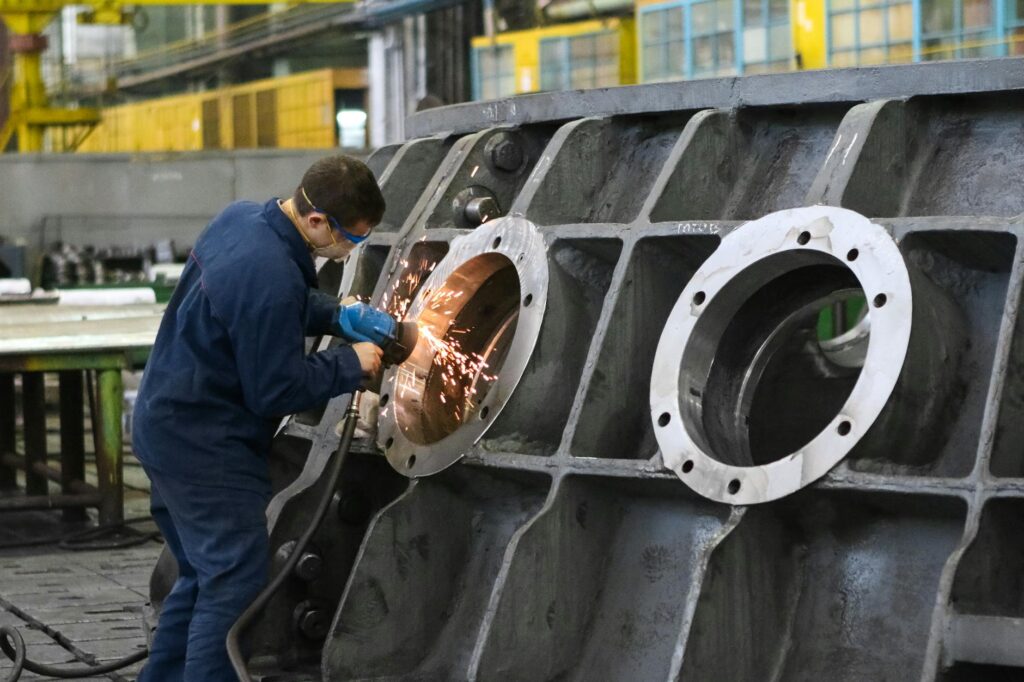
Beyond the Basics: Metalworking Tools for the Serious Pro
This isn’t your grandpa’s toolbox. We’re talking about the metalworking tools that can chew through titanium, whisper-cut hardened steel, and hold tolerances tighter than a politician’s promise. Forget the hammers and basic files. if you’re serious about fabrication, you need to know the machines that define precision and the consumables that make it happen. The conversation around metalworking tools often gets bogged down in beginner gear, but for those of us who live and breathe metal, the real magic happens with advanced machinery and specialized cutting heads.
The world of professional metalworking tools shifted dramatically with the widespread adoption of CNC technology and advancements in material science. What was once the domain of highly skilled machinists laboring for hours can now be achieved with sophisticated machines, often controlled by computer software.
What Distinguishes Pro-Level Metalworking Tools?
Professional metalworking tools are defined by their precision, durability, power, and capacity for complex operations. These aren’t tools you pick up for a weekend project. they’re investments designed for high-volume production, tight tolerances, and demanding materials. Think industrial-grade lathes, precision milling machines, advanced plasma cutters, and heavy-duty press brakes. They offer superior control, repeatability, and the ability to work with exotic alloys that would destroy lesser equipment.
A key differentiator is the level of control. While a hobbyist might use a drill press, a professional shop relies on a vertical machining center (VMC) from brands like Haas Automation — which offers multi-axis capabilities and programmable precision.
[IMAGE alt=”Haas VF-2 Vertical Machining Center in action” caption=”A Haas VF-2 VMC demonstrating precise multi-axis machining.”]
The Heartbeat of the Shop: Machining Centers and Lathes
For any serious metalworker, a Computer Numerical Control (CNC) milling machine and a CNC lathe are non-negotiable. These machines automate complex cuts, ensuring identical parts every time. A modern CNC mill, for instance, can perform operations like contouring, drilling, tapping, and pocketing with micron-level accuracy. Here’s Key for industries demanding tight tolerances, such as aerospace or medical device manufacturing.
I remember back in 2018, wrestling with a especially stubborn batch of Inconel 718 for a custom exhaust manifold project. Using a standard manual lathe, achieving the necessary surface finish and diameter consistency was a brutal, hours-long ordeal, prone to human error. Switching to a Doosan Puma series CNC lathe, even a slightly older model, cut that machining time by over 70% and delivered a finish that was simply flawless. The machine didn’t get tired. it just executed the program.
The power of these machines lies in their ability to execute complex toolpaths. A 5-axis CNC mill can machine parts from almost any angle in a single setup, eliminating the need for multiple re-fixturing steps. This not only saves time but drastically reduces the potential for cumulative error. According to a 2023 report by the National Institute of Standards and Technology (NIST), advanced manufacturing technologies like CNC machining continue to drive significant productivity gains across U.S. industries.
Choosing the Right Machining Center
When selecting a CNC mill, consider the number of axes (3-axis is common, but 5-axis offers immense flexibility), spindle speed and power, travel range, and the control system. Brands like Haas, DMG Mori, and Mazak offer strong machines catering to different production needs.
Lathe Capabilities for Precision Work
For lathes, look at swing (maximum diameter), between-centers distance (maximum length), spindle bore diameter, and turret stations. Live tooling on a CNC lathe — which allows milling and drilling operations on the workpiece while it’s on the chuck, is a major shift for reducing part count and improving efficiency.
- Unmatched precision and repeatability.
- Significant reduction in labor time and cost per part.
- Ability to machine complex geometries.
- Consistent quality across production runs.
- Reduced material waste through optimized toolpaths.
- High initial investment cost.
- Requires skilled operators and programmers.
- Maintenance and upkeep can be costly.
- Less economical for very small batch runs or one-offs compared to manual machining.
latest Metal Cutting Tools
Beyond the machines themselves, the cutting tools and consumables are where the real efficiency and finish are determined. Carbide inserts, high-speed steel (HSS) bits, diamond-coated end mills, and specialized plasma consumables all play critical roles. The choice of cutting tool directly impacts cutting speed, tool life, surface finish, and the ability to cut specific materials.
A common mistake I see is using the wrong grade of carbide insert for the material being cut. For instance, using a general-purpose P20 grade for cutting hardened tool steel is a recipe for rapid tool failure. A specialized, coated carbide grade like a TiN/TiCN or a ceramic insert is necessary for such applications. A 2023 study published in the Journal of Manufacturing Processes highlighted how advancements in tool coatings have extended tool life by up to 30% in high-temperature alloy machining.
Plasma cutters, while incredibly fast for cutting sheet metal, require a keen understanding of their consumables – tips, electrodes, swirl rings, and shields. Using worn-out consumables drastically reduces cut quality, increases dross, and can even damage the torch. Keeping a stock of genuine Hypertherm consumables, for example, is essential for maintaining peak performance on their Powermax systems.
Plasma vs. Laser Cutting: What’s the Difference?
Plasma cutters use an electrical arc and compressed gas to melt and blow away metal, making them versatile for various thicknesses and conductive materials. Laser cutters use a focused beam of light to melt or vaporize the material, offering superior edge quality and precision, especially on thinner metals, but at a higher cost and with limitations on reflectivity.
The Role of Tool Steel and Carbide
Tool steels are incredibly hard and wear-resistant, making them ideal for cutting tools, dies, and molds. Carbide, a composite material, offers even greater hardness and strength, especially when used as inserts brazed or mechanically fastened to tool bodies. The grade of carbide (e.g., K10, P30, M40) dictates its suitability for specific applications like roughing, finishing, or high-speed cutting.
🎬 Related Video
📹 Deburring tools – Cogsdill and MTDCNC Interview — Watch on YouTube
Beyond Machining: Forming and Joining Tools
Metalworking isn’t just about removing material. it’s also about shaping it. Advanced tools like hydraulic press brakes, slip roll machines, and specialized sheet metal shears are vital for fabricating complex shapes. For joining, while TIG and MIG welding are common, professionals often use robotic welding cells, ultrasonic welders, or even advanced laser welding systems for speed and precision.
the tooling (dies and punches) is as critical as the machine itself. A worn or incorrectly matched punch and die set can lead to imprecise bends, surface damage, or even tool breakage. Companies like Amada offer a vast array of press brake tooling solutions designed for specific materials and bend configurations.
The Nuances of Press Brake Tooling
Tooling comes in various profiles (acute, radius, gooseneck) and tonnage ratings. Selecting the correct tooling ensures clean bends, prevents material springback issues, and extends the life of both the tooling and the press brake.
Advanced Welding Technologies
Robotic welding offers incredible speed and consistency for high-volume production. Laser welding, But — provides a narrow heat-affected zone and high precision, ideal for delicate assemblies or materials prone to distortion. Ultrasonic welding uses high-frequency vibrations to create a solid-state weld, perfect for joining dissimilar metals or thin foils.
Expert Tip: Don’t underestimate the power of proper workholding. Advanced metalworking tools are only as good as the system holding the workpiece. High-quality vises, chucks, collets, and custom fixtures from brands like Kurt Manufacturing are essential for safely and accurately performing complex operations.
The Unsung Heroes: Measuring and Inspection Tools
Accuracy is king in professional metalworking. Calipers, micrometers, bore gauges, height gauges, and CMMs (Coordinate Measuring Machines) are indispensable for verifying dimensions and ensuring parts meet specifications. A high-quality digital caliper set from Mitutoyo or Starrett is a must-have, but for critical applications, a CMM offers unparalleled accuracy and data capture.
The contrast between a cheap digital caliper and a precision instrument from Mitutoyo is stark. The latter offers higher resolution, better repeatability, and a more strong build that can withstand the shop environment. I once encountered a batch of supposedly identical parts that varied by nearly 0.02 inches in critical dimension – a direct result of using sub-par measuring tools that weren’t calibrated. A quick switch to calibrated Starrett micrometers revealed the discrepancy immediately.
CMMs for Ultimate Precision
Coordinate Measuring Machines use probes to measure the physical geometry of an object. They can capture thousands of data points, creating a 3D model that can be compared against the original CAD design, identifying even the slightest deviations.
Important Note: Calibration isn’t optional. Regularly calibrating all your measuring tools, whether it’s a simple ruler or a complex CMM, is Key for maintaining accuracy and ensuring compliance with industry standards. The American Society of Mechanical Engineers (ASME) publishes standards for calibration and measurement uncertainty that are often required in regulated industries.
Contrarian Take: Sometimes Simpler is Better
While the allure of the latest CNC marvel is strong, there’s a place for refined manual metalworking tools. A well-tuned manual lathe or mill, operated by a highly skilled machinist, can still outperform a poorly programmed or maintained CNC for certain one-off parts or quick adjustments. The tactile feedback and immediate control offered by manual machines are irreplaceable for some tasks. Don’t discard your Bridgeport mill just yet. its utility endures.
Also, high-quality hand tools—files, scrapers, deburring tools, and layout punches—remain essential. A perfectly sharpened scraper from a company like Vallorbe can achieve a surface finish that no power tool can replicate without significant downstream processing.
Frequently Asked Questions
what’s the most essential metalworking tool for a professional?
The most essential metalworking tool for a professional is typically a high-precision CNC lathe or milling machine. These machines automate complex operations, ensuring accuracy, repeatability, and efficiency critical for modern manufacturing and fabrication standards.
How do plasma cutters differ from laser cutters in professional settings?
Plasma cutters use an electric arc and gas to melt metal, offering versatility and lower cost for various thicknesses. Laser cutters use a focused light beam for high precision and edge quality, especially on thinner metals, but generally come with a higher price tag and operational complexity.
What are the key considerations when buying press brake tooling?
When buying press brake tooling, consider the material you’re bending, the required bend radius, the tonnage capacity of your press brake, and the durability of the steel. Proper tooling selection prevents damage and ensures precise, repeatable bends.
Why is workholding so critical for advanced metalworking tools?
Workholding secures the workpiece, preventing movement during machining. For advanced tools operating at high speeds and forces, strong workholding ensures operator safety, prevents damage to the tool and workpiece, and is absolutely essential for achieving the required precision and tolerances.
Can manual metalworking tools still compete with CNC machines?
Yes, manual metalworking tools like lathes and mills retain value for specific tasks, such as intricate one-off parts or immediate on-machine adjustments. A skilled operator’s tactile feedback and control can sometimes surpass automated systems for niche applications where speed isn’t the primary driver.
My Take: Invest Wisely, Learn Continuously
The world of professional metalworking tools is vast and constantly evolving. From the multi-axis wizardry of CNC machines to the critical precision of measuring instruments and the subtle art of tooling selection, every component matters. My advice? Don’t chase every shiny new gadget. Understand your specific needs, invest in quality, and never stop learning. The metals aren’t going to shape themselves, and the tools you wield will define the quality and complexity of your creations. Keep pushing the boundaries of what’s possible with the right metalworking tools.
Last updated: April 2026
Source: Britannica
Editorial Note: This article was researched and written by the The Metal Specialist editorial team. We fact-check our content and update it regularly. For questions or corrections, contact us.
Source: Britannica