Metalworking Processes: Beyond the Forge
This guide covers everything about what’s metalworking process. Metalworking process is the foundational art and science of transforming raw metal into functional components and intricate structures, a practice stretching back millennia and continuing to evolve with latest technology. It’s not just about melting and hammering. it’s a complex interplay of physics, chemistry, and sheer grit that defines modern industry. From the earliest blacksmiths shaping iron to today’s automated factories producing aerospace components, understanding these processes is key to appreciating how our world is built.
Last updated: April 18, 2026
This isn’t a ‘learn to weld in an afternoon’ kind of piece. We’re diving deep into the core principles that govern how metal gets its shape, the methods that have built empires and continue to drive innovation. Forget the fluff. Here’s about the raw, unvarnished truth of what metalworking process truly entails.
What Exactly is a Metalworking Process?
At its heart, a metalworking process refers to any method used to alter the shape, size, or physical properties of a metal piece. This transformation can involve adding, removing, or forming material. Think of it as giving metal a specific purpose through controlled manipulation. These processes are the building blocks for everything from a simple nail to a complex turbine engine. The goal is always to achieve a desired outcome, whether that’s increased strength, a precise dimension, or a specific aesthetic.
[IMAGE alt=”Close-up of molten metal being poured into a mold” caption=”Molten metal being poured, a key step in casting processes.”]
The Bureau of Labor Statistics reported in 2023 that over 1.5 million workers were employed in manufacturing occupations involving metalworking, highlighting its vast economic importance.
The Big Categories: Shaping Metal
Metalworking processes can be broadly categorized into a few fundamental approaches. Each category has its own set of techniques, advantages, and ideal applications. Understanding these distinctions is Key for any engineer, designer, or hobbyist looking to select the right method for a given project.
1. Metal Forming Processes
These processes alter the shape of a metal piece by applying force, causing it to deform without fracturing. The metal’s internal structure is rearranged, often increasing its strength and toughness.
- Forging: This ancient technique involves heating metal and shaping it using localized compressive forces, typically with hammers or dies. Think of a blacksmith striking hot steel. Modern forging can be done hot or cold, yielding parts with excellent grain structure and high strength. A 2023 study by the National Institute of Standards and Technology (NIST) highlighted advancements in computational modeling for optimizing forging die design.
- Rolling: Metal is passed between rollers to reduce its thickness and make it uniform. Here’s how I-beams and sheet metal are made. It can be done hot or cold.
- Drawing: Metal is pulled through a die to reduce its cross-section and increase its length, common for making wires and rods.
- Extrusion: Metal is pushed through a die of a desired cross-section, producing complex shapes like those found in aluminum window frames.
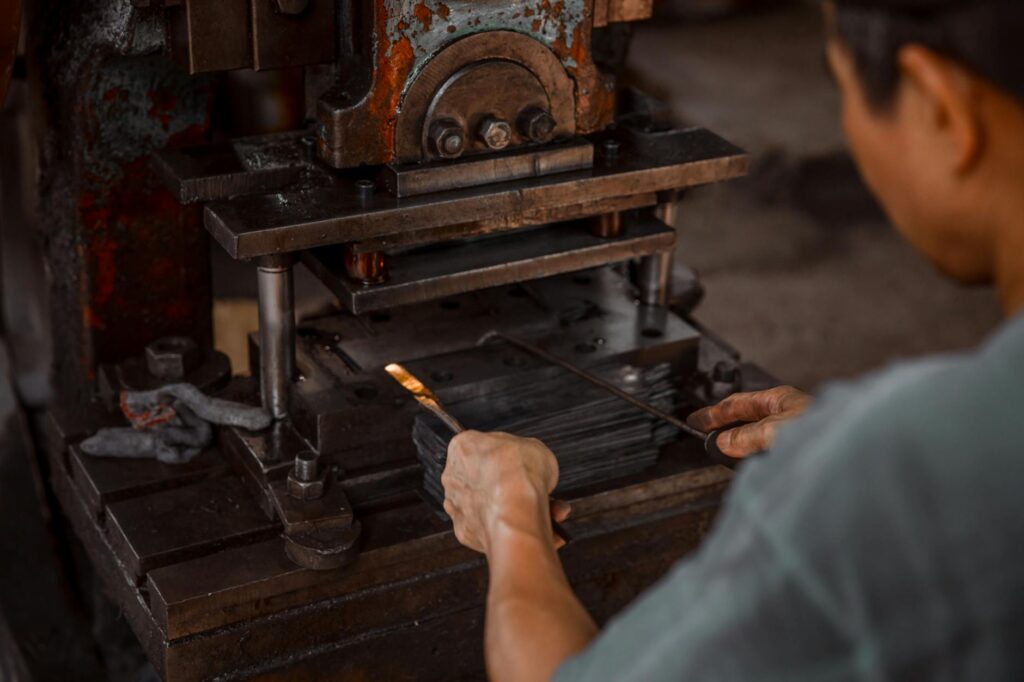
- Stamping/Pressing: Sheet metal is shaped by dies and punches under high pressure. Here’s used for car body panels and appliance housings.
2. Metal Cutting and Machining Processes (Subtractive Manufacturing)
These methods involve removing unwanted material from a workpiece to achieve the desired shape and dimensions. Precision is often the hallmark of these techniques.
- Turning: A workpiece rotates while a cutting tool moves parallel to the axis of rotation, creating cylindrical shapes. Here’s fundamental for making shafts and bolts.
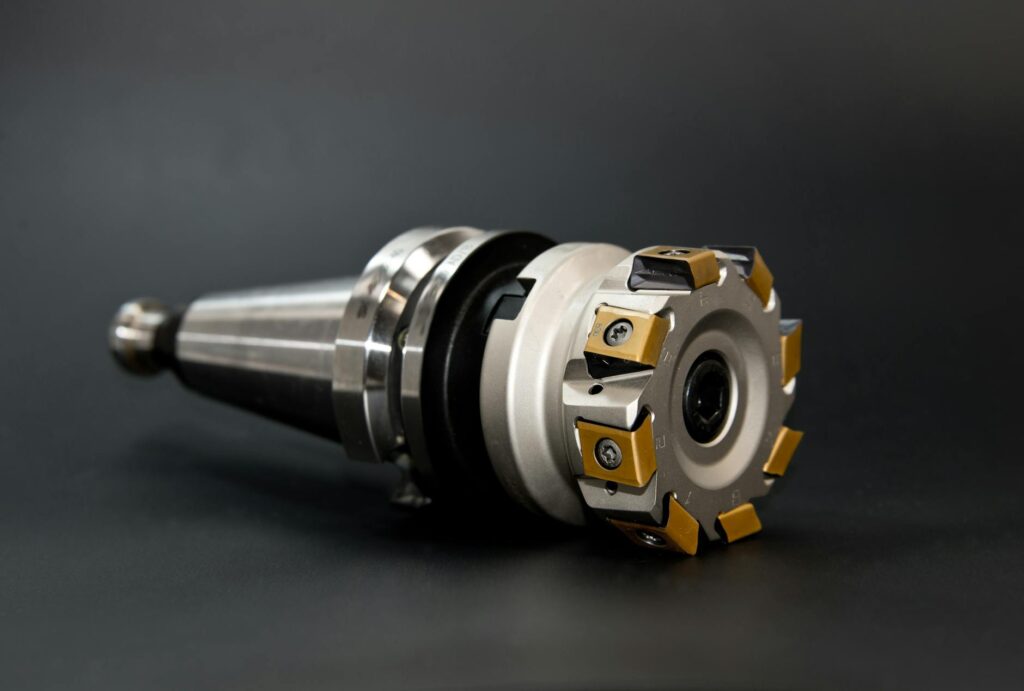
- Milling: A rotating cutting tool removes material from a stationary workpiece. You can create flat surfaces, slots, and complex contours. CNC (Computer Numerical Control) milling machines allow for incredible precision and repeatability.
- Drilling: Creates round holes using a rotating drill bit.
- Grinding: Uses abrasive wheels to remove small amounts of material, typically for achieving a fine finish or precise dimensions on hard materials.
- Electrical Discharge Machining (EDM): Uses electrical sparks to erode metal, ideal for very hard materials or complex shapes that are difficult to machine conventionally.
[IMAGE alt=”CNC milling machine in action” caption=”A CNC milling machine precisely shaping a metal part.”]
3. Metal Joining Processes
These processes combine two or more metal pieces to create a single, larger structure.
- Welding: Fuses metal pieces together using heat, pressure, or both, often with a filler material. Common types include Arc welding (SMAW, GMAW/MIG, GTAW/TIG) and Resistance welding.
- Brazing and Soldering: Similar to welding but use a lower melting point filler metal that joins the base metals without melting them. Brazing uses filler metals with melting points above 450°C (840°F), while soldering is below that.
- Riveting: Mechanically joins metal parts using rivets — which are small metal pins.
4. Metal Casting Processes
In casting, molten metal is poured into a mold and allowed to solidify into the desired shape. It’s excellent for creating complex geometries.
- Sand Casting: The oldest and most common method, using sand molds. Good for large, intricate parts.
- Die Casting: Molten metal is injected under high pressure into a reusable metal mold (die). Ideal for high-volume production of smaller, precise parts.
- Investment Casting (Lost Wax): A wax pattern is coated with ceramic, the wax is melted out, and molten metal is poured into the cavity. Used for highly detailed, intricate components like jewelry and turbine blades.
5. Heat Treatment Processes
These processes alter the microstructure of metals to improve their mechanical properties like hardness, strength, and ductility, without changing their shape.
- Annealing: Heating metal and cooling it slowly to soften it, relieve stress, and improve ductility.
- Hardening (Quenching): Heating metal to a specific temperature and then rapidly cooling it (quenching) to increase hardness.
- Tempering: Reheating hardened metal to a lower temperature and cooling it to reduce brittleness while retaining some hardness.
- Case Hardening: Hardening only the surface layer of a metal part, leaving the core tough.
My Experience: The Unexpected Challenge of Precision
When I first started experimenting with custom metal parts for a restoration project back in 2022, I assumed machining was the end-all. I needed tiny, intricate gears. I sent my designs off to a local machine shop. They came back perfect, but the cost was astronomical. I then explored casting, thinking it would be cheaper. While the initial mold cost was high, producing multiple identical parts was more economical. However, achieving the tight tolerances I needed for those gears with casting alone required post-machining anyway. This taught me a valuable lesson: no single metalworking process is perfect for every scenario. Often, a combination is required. For instance, casting a rough shape and then machining critical features is a common and cost-effective strategy.
🎬 Related Video
📹 Metalworking Lathe Operator : Job Interviews Uncovered — Watch on YouTube
Contrarian Take: Is 3D Printing Really Metalworking?
Now, the tech bros will scream about additive manufacturing. And yes, 3D printing metal is a thing – powder bed fusion, binder jetting, etc. But is it a ‘metalworking process’ in the same vein as forging or machining? I’d argue it’s a distinct category, more akin to creating from scratch than working existing metal. It builds layer by atomic layer, different from deforming or removing material. While incredibly powerful and opening new design frontiers, it doesn’t carry the same legacy or physical manipulation principles. A 2024 report from McKinsey &. Company on the future of manufacturing still places traditional metalworking techniques like machining and forming at the forefront for high-volume, cost-sensitive applications.
Choosing the Right Process: A Balancing Act
Selecting the appropriate metalworking process depends on numerous factors:
| Factor | Considerations | Best Suited For |
|---|---|---|
| Material Type | Ductility, hardness, melting point, strength. Steel behaves differently than aluminum. | Forming for ductile metals, casting for brittle, machining for most. |
| Part Geometry | Complexity, internal features, thin walls, sharp corners. | Casting for complex shapes, machining for precision, forging for simple to moderate. |
| Production Volume | One-off prototype vs. mass production. | Machining for prototypes, die casting/stamping for high volume. |
| Required Tolerances | How precise do the dimensions need to be? | Machining offers highest precision; casting and forming may need secondary operations. |
| Cost Budget | Tooling costs, per-part costs, labor. | Varies wildly; stamping/die casting can have high initial tooling costs but low per-part cost. |
| Desired Properties | Strength, hardness, surface finish, fatigue life. | Forging for strength, heat treatment for hardness, grinding for finish. |
Honestly, picking the wrong process can kill a project before it even starts. I’ve seen perfectly good designs fail because the chosen manufacturing method was unsuited, leading to exorbitant costs or parts that simply couldn’t perform. It’s a brutal lesson, but a necessary one.
The Role of Heat Treatment and Finishing
It’s Key to remember that metalworking processes don’t end with shaping. Heat treatment refines the metal’s internal structure, and finishing processes (like polishing, plating, painting, or anodizing) enhance aesthetics and provide protection against corrosion. These post-shaping steps are integral to the final product’s performance and longevity.
Frequently Asked Questions
what’s the most basic metalworking process?
The most basic metalworking process is arguably forging — which involves shaping metal by heating it and striking it with a hammer or die. This ancient technique relies on applying force to deform metal and has been used for millennia to create tools, weapons, and decorative items.
Which metalworking process is best for complex shapes?
Casting processes, especially investment casting and die casting, are generally best for creating complex shapes with intricate details. These methods involve pouring molten metal into a mold cavity that precisely replicates the desired form, allowing for geometries difficult to achieve through machining or forming.
How do machining and forming differ?
Machining is a subtractive process that removes material (like milling or turning) to achieve a shape, while forming is an additive or deformation process that shapes metal by applying force without removing significant material (like forging or rolling).
what’s the difference between welding and brazing?
Welding fuses base metals by melting them, often with a filler metal, creating a strong metallurgical bond. Brazing and soldering join metals using a filler metal that melts at a lower temperature, bonding the base metals through capillary action without melting them.
Why is heat treatment important in metalworking?
Heat treatment is vital because it alters the metal’s internal microstructure to improve its mechanical properties, such as hardness, strength, toughness, and ductility. It allows manufacturers to tailor the metal’s performance for specific applications after initial shaping.
The Future of Metalworking Processes
The world of metalworking is constantly shifting, driven by advancements in automation, materials science, and digital technologies. Expect to see more integration of AI in process optimization, greater use of robotics in fabrication, and continued development in additive manufacturing techniques. However, the fundamental principles of deforming, cutting, casting, and joining metal will remain the bedrock of industries worldwide. Understanding what’s metalworking process today is to grasp the engine of our material world.
Source: Britannica
Editorial Note: This article was researched and written by the The Metal Specialist editorial team. We fact-check our content and update it regularly. For questions or corrections, contact us.