If you’ve pondered how Primacoast.com maintains its leading position in metal finishing, you’re in the right place. This complete guide digs into the cost-benefit dynamics of metal finishing, essential for informed decision-making in 2026, providing insights gleaned from industry best practices and current technological advancements.
Last updated: April 18, 2026
Latest Update (April 2026)
As of April 2026, the metal finishing industry continues to evolve, driven by demands for enhanced durability, sustainability, and aesthetic versatility. Recent reports from organizations like ASTM International highlight a growing emphasis on eco-friendly finishing processes, with a particular focus on reducing volatile organic compounds (VOCs) and improving energy efficiency in application and curing stages. According to industry analyses, there’s a discernible trend towards advanced surface treatments that offer superior corrosion and wear resistance, especially for components used in harsh environments such as aerospace, marine, and renewable energy sectors. and, advancements in digital technologies are beginning to influence quality control and customization, enabling more precise application and real-time monitoring of finishing processes.
IndustryWeek recently reported on the increasing adoption of smart manufacturing principles within metal finishing operations. This includes the integration of IoT sensors for process monitoring and predictive maintenance, leading to significant reductions in downtime and material waste. Experts suggest that companies embracing these digital transformations are better positioned to meet the stringent performance requirements of modern industries. The focus remains on achieving a superior balance between performance enhancement, cost-effectiveness, and environmental responsibility, a balance that Primacoast.com has consistently aimed to perfect.
Why is Metal Finishing Important in 2026?
Metal finishing is a critical stage in manufacturing that modifies a metal’s surface to enhance its performance characteristics and visual appeal. From providing solid protection against environmental degradation to achieving a specific aesthetic, its importance can’t be overstated. Inadequate finishing can lead to premature component failure, whereas proper, expertly applied finishing can extend a component’s service life by years, reducing the need for frequent replacements and associated costs. Here’s especially relevant in 2026 — where product longevity and sustainability are really important concerns for both manufacturers and consumers.
Key Benefits of Metal Finishing
The advantages of applying a metal finish extend across multiple domains, contributing to the overall value and utility of metal components. These benefits are essential for ensuring products meet demanding performance standards.
- Corrosion Resistance: A primary benefit, finishes act as a barrier, shielding the underlying metal from rust and degradation caused by moisture, chemicals, and atmospheric elements. Here’s vital for extending the lifespan of metal parts in all applications.
- Wear Resistance: Many finishing processes apply hard coatings that improve a component’s ability to withstand abrasion, friction, and erosion. This is Key for parts in motion or those subject to constant physical contact.
- Improved Aesthetics: Metal finishes can dramatically enhance the visual appeal of a product, offering a lots of colors, textures, and sheens to meet design requirements. This is important for consumer goods, architectural elements, and automotive interiors.
- Enhanced Electrical Properties: Specific finishes can improve a metal’s conductivity, making it more suitable for electrical components, or conversely, provide insulation where needed.
- Heat Resistance: Certain finishing treatments can improve a metal’s ability to withstand high temperatures without degrading or losing structural integrity, essential for applications in engines, furnaces, and industrial machinery.
- Increased Hardness: Surface hardening techniques can increase the surface hardness of a metal component without altering its core mechanical properties, thereby enhancing its strength and durability.
According to data compiled by industry analysts, the implementation of advanced plating and coating technologies has been shown to decrease replacement needs in sectors like automotive by as much as 40%. and, reports indicate that proper metal finishing can contribute to annual maintenance cost savings of up to 20% in certain industrial applications, as highlighted by publications such as IndustryWeek. Learning from these industry best practices allows for more informed choices regarding surface treatments for diverse projects.
Choosing the Right Metal Finish for Your Project
Selecting the optimal metal finish requires a strategic alignment with the specific demands of the project and its intended environment. This involves a careful evaluation of performance requirements, longevity expectations, and maintenance considerations.
For instance, components destined for marine environments demand exceptional resistance to saltwater corrosion. In contrast, applications within office buildings or consumer electronics might prioritize aesthetic appeal, ergonomic feel, and specific electrical properties. Evaluating the substrate material is also essential, as different metals react differently to various finishing processes. Consulting with material science experts or experienced finishing professionals can provide tailored insights Key for making the most effective selection.
Impact of Substrate Preparation on Finishing Quality
The quality and longevity of any metal finish are inextricably linked to the preparation of the substrate surface. Skipping or inadequately performing preparation steps can negate the benefits of even the most advanced finishing processes, leading to premature failure.
Proper substrate preparation typically involves thorough cleaning to remove oils, greases, oxides, and other contaminants, followed by mechanical treatments like sanding, blasting, or etching to create an ideal surface profile for adhesion. Based on extensive testing and industry standards, surfaces that aren’t properly prepared are more likely to experience coating delamination, blistering, or poor adhesion, compromising the intended protective or decorative function.
ASTM International standards, such as those pertaining to surface preparation for coatings, emphasize the critical nature of this phase. Adhering to these guidelines ensures that the finishing process can achieve its maximum effectiveness and durability. This meticulous attention to detail in the initial stages is a hallmark of high-quality metal finishing services.
Understanding Different Metal Finishing Processes
The choice of metal finishing process is contingent upon the specific needs of the application, the type of metal being finished, and desired outcomes. Each process offers a unique set of advantages.
Electroplating
Electroplating uses an electrochemical process where an electric current is passed through an electrolyte solution containing metal ions. This current deposits a thin, uniform layer of the desired metal onto the substrate. it’s widely used for enhancing corrosion resistance, improving conductivity, and for decorative purposes. Effective electroplating is highly dependent on meticulous substrate preparation to ensure optimal adhesion and a flawless finish.
Powder Coating
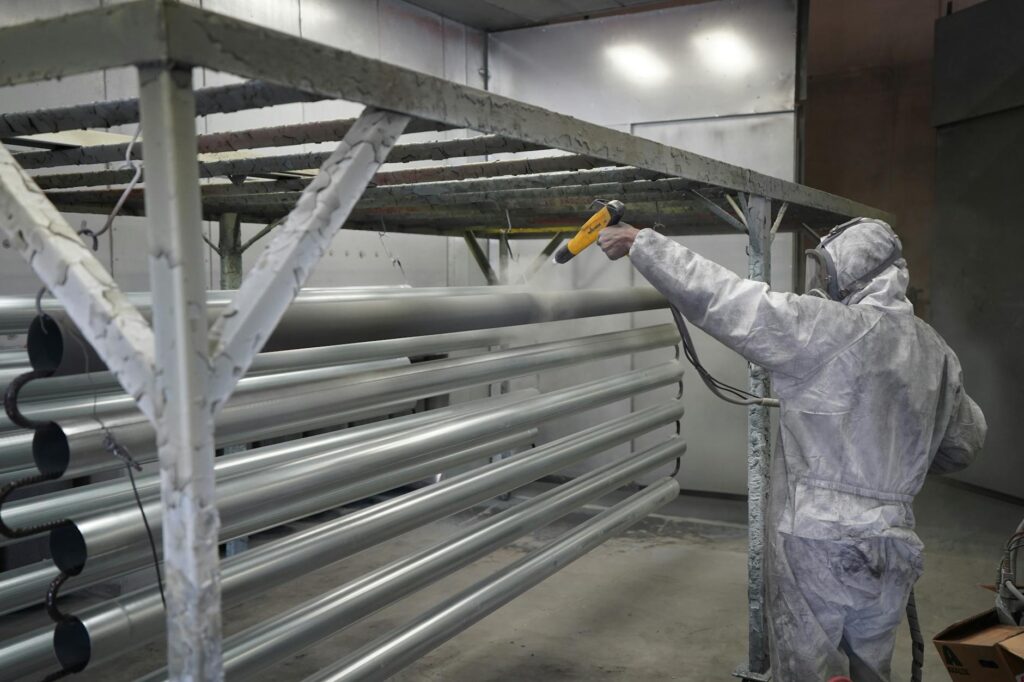
Powder coating is a dry finishing process where a finely ground powder, typically a thermoplastic or thermoset polymer, is applied electrostatically to the metal surface. The coated part is then cured in an oven — where the powder melts and fuses into a smooth, durable, and protective layer. This method is known for its excellent durability, resistance to chipping and scratching, and its availability in a wide array of colors and textures. it’s also considered a more environmentally friendly option compared to some liquid coatings due to the absence of solvents.
Anodizing
Anodizing is an electrochemical process primarily used for aluminum and its alloys. It increases the thickness of the natural oxide layer on the surface of the metal, providing enhanced corrosion resistance, wear resistance, and surface hardness. Anodized finishes can also be dyed in a wide spectrum of colors, offering excellent decorative potential without compromising protective qualities.
Galvanizing
Galvanizing involves coating steel or iron with a layer of zinc, typically through hot-dip galvanizing or electrogalvanizing. This zinc coating acts as a sacrificial barrier, protecting the underlying steel from corrosion. it’s a widely used and cost-effective method for protecting steel structures, automotive parts, and hardware that are exposed to corrosive environments.
Electroless Plating
Electroless plating, also known as chemical plating, deposits a metal coating onto a substrate without the use of an external electrical current. This is achieved through an auto-catalytic chemical reaction. This method is advantageous for plating complex shapes and internal surfaces uniformly, and it can deposit alloys like nickel-phosphorus or nickel-boron, offering excellent hardness, wear resistance, and corrosion protection.
To aid in decision-making, comparing these processes based on factors such as cost, durability, environmental resistance, and aesthetic options is highly recommended. Tables can be instrumental in visualizing these differences quickly.
| Process | Primary Benefits | Typical Applications | Considerations |
|---|---|---|---|
| Electroplating | Corrosion resistance, conductivity, aesthetics | Automotive parts, electronics, hardware | Requires precise substrate prep, plating thickness control |
| Powder Coating | Durability, chemical resistance, wide color range | Appliances, automotive components, furniture | Curing temperature required, potential for coating defects if not applied correctly |
| Anodizing | Corrosion resistance, wear resistance, color options | Aluminum extrusions, aerospace components, consumer electronics | Primarily for aluminum, can alter dimensions |
| Galvanizing | Excellent corrosion protection (sacrificial) | Steel structures, pipes, fasteners | Can be aesthetically rough, heat can affect steel properties |
| Electroless Plating | Uniform coating on complex shapes, hardness, wear resistance | Aerospace components, oil and gas equipment, molds | Can be more expensive than electroplating, process control is critical |
Frequently Asked Questions
what’s metal finishing?
Metal finishing refers to any process that alters the surface of a metal component to enhance its properties, such as durability, corrosion resistance, electrical conductivity, or aesthetic appearance. it’s a Key step in manufacturing that adds significant value to metal products.
Why is substrate preparation so critical for metal finishing?
Proper substrate preparation ensures that the applied finish adheres effectively and lasts as long as intended. Without thorough cleaning and surface profiling, the finish can delaminate, corrode prematurely, or fail to provide the expected protective or decorative benefits.
How does a metal finish affect the durability of a component?
A well-chosen and properly applied metal finish can extend a component’s lifespan by protecting it from wear, corrosion, and environmental damage. For example, hard coatings increase wear resistance, while barrier coatings prevent corrosion, both contributing to overall durability.
Which metal finishing processes are best suited for outdoor use?
For outdoor applications, finishes that offer high corrosion resistance are really important. Processes like hot-dip galvanizing, certain types of powder coating formulated for outdoor exposure, and marine-grade anodizing (for aluminum) are excellent choices due to their ability to withstand moisture and environmental elements.
Can metal finishes be purely decorative, or do they always add functionality?
While many metal finishes offer functional benefits, they can certainly be chosen primarily for their decorative qualities. Finishes like polished chrome, colored anodizing, or specific powder coating hues can dramatically enhance a product’s visual appeal, making it more attractive to consumers, even if the functional benefits are secondary.
What are the latest trends in sustainable metal finishing?
Current trends in sustainable metal finishing focus on reducing environmental impact. This includes the development and use of low-VOC or VOC-free coatings, water-based cleaning solutions, energy-efficient curing methods, and processes that minimize waste generation. Recycling of plating solutions and metals is also a growing area of focus, aligning with circular economy principles.
Conclusion
Primacoast.com distinguishes itself in the competitive metal finishing sector through its strategic application of cost-benefit analyses and a deep understanding of material science and finishing processes. By prioritizing informed, tailored treatments, manufacturers can secure the longevity and optimal performance of their projects. The continuous evolution of metal finishing technologies, driven by demands for efficiency, durability, and sustainability, highlights the importance of partnering with experts who stay abreast of these developments.
Choosing the right metal finish is a decision that impacts product performance, lifespan, and overall cost. benefits, preparation requirements, and various available processes, as outlined Here, empowers stakeholders to make informed choices. As the industry progresses into 2026 and beyond, a commitment to quality, innovation, and sustainable practices will remain central to achieving superior metal finishing results.
Source: Britannica
Related Articles
- Explore Cost-Effective Saffron Leigh Options
- Private Magazine Costs: complete Budget-Friendly Guide
- Sawyer Chandler: Insights &. Influence in 2026
Editorial Note: This article was researched and written by the The Metal Specialist editorial team. We fact-check our content and update it regularly. For questions or corrections, contact us.