Metalworking: The Raw Truth Beyond the Shine
This guide covers everything about what’s metalworking. what’s metalworking? Forget the romanticized images of sparks flying in a medieval forge for a moment. Metalworking is the ancient, ongoing, and utterly essential discipline of shaping metal into useful objects, tools, and art. It’s the bedrock of civilization, from the first bronze swords to the intricate components in your smartphone. In 2024, it’s more diverse and technologically advanced than ever, but the core principles of understanding material properties and applying force remain really important.
This isn’t about dabbling with a basic torch kit. it’s about the deep, often gritty, reality of transforming raw metal into something tangible. You’re not just heating steel. you’re coaxing it, cutting it, joining it, and finishing it with a precision that borders on alchemy. And trust me, there’s a lifetime of learning in that process.
Last updated: April 2026
What Metalworking Really Is
Metalworking is the broad category of processes and techniques used to create or modify metal objects. It encompasses everything from basic hand-forming methods like hammering and filing to advanced computer-controlled processes like CNC machining and laser cutting. The fundamental goal is to alter the shape, size, or surface characteristics of metal to achieve a desired outcome.
Think of it as a conversation with metal. You apply heat, pressure, or cutting force, and the metal responds. A skilled metalworker listens to that response – the sound of a hammer strike, the feel of a file biting into steel, the visual cue of molten solder flowing – and uses it to guide the transformation. It’s a tactile, often demanding, but incredibly rewarding field.
The Evolution: From Hammer to High-Tech
The history of metalworking is the history of human progress. The Bronze Age, starting around 3300 BCE, marked a monumental leap, enabling stronger tools and weapons than those made from stone or copper. Later, the Iron Age, beginning around 1200 BCE, brought even more accessible and durable materials. Blacksmithing, the art of shaping iron and steel using heat and a hammer, became a cornerstone of nearly every society.
Fast forward to today, and the landscape is drastically different. While blacksmithing persists as a vital art form and a practical trade, modern metalworking heavily relies on machinery. The development of electric furnaces, arc welding in the early 20th century, and eventually computer numerical control (CNC) machines have transformd what’s possible. A 2023 report by the International Organization for Standardization (ISO) highlighted the increasing integration of automation in metal fabrication, with CNC machines accounting for a significant portion of industrial production.
[IMAGE alt=”Evolution of metalworking tools from anvil to CNC machine” caption=”From ancient anvils to modern CNC machines, metalworking has seen incredible technological leaps.”]
Core Metalworking Processes
Understanding what metalworking is requires looking at its key processes. Here are the fundamental actions that shape metal:
Forming
This involves changing the shape of metal without removing material. Think of bending sheet metal into a car body panel, forging a horseshoe, or stamping intricate designs. Processes include:
- Forging: Shaping metal by heating it and striking it with a hammer or press.
- Bending: Applying force to deform metal along a straight edge or curve.
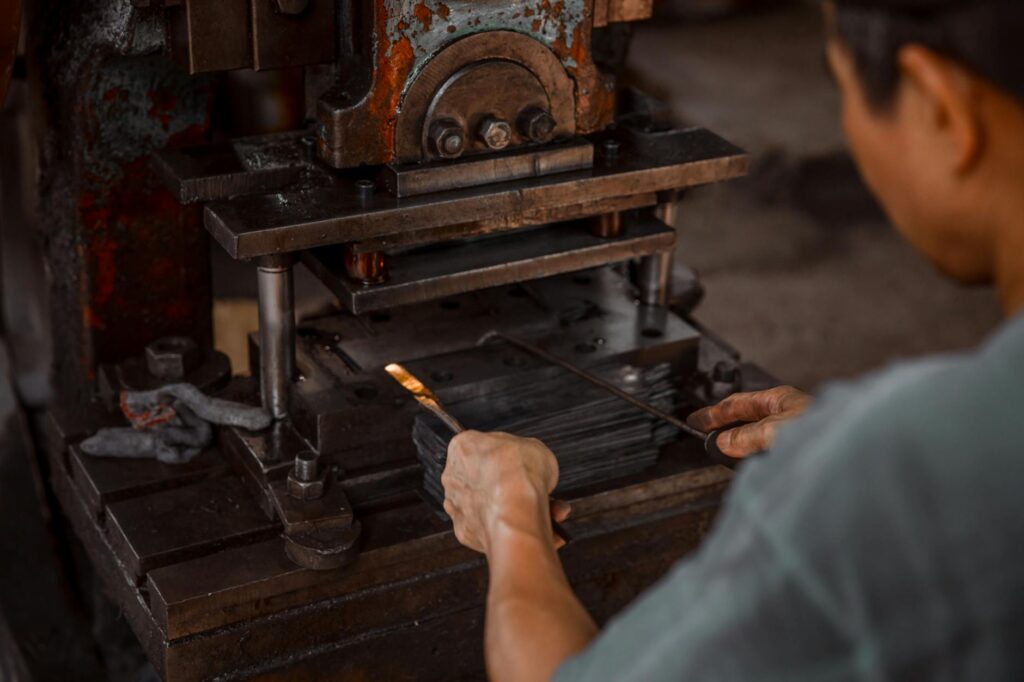
- Stamping: Using a die and punch to press a shape into sheet metal.
- Drawing: Pulling metal through a die to reduce its cross-section or form a hollow shape (like wire).
Cutting
These processes remove material to achieve a desired shape or dimension. Here’s where precision really matters.
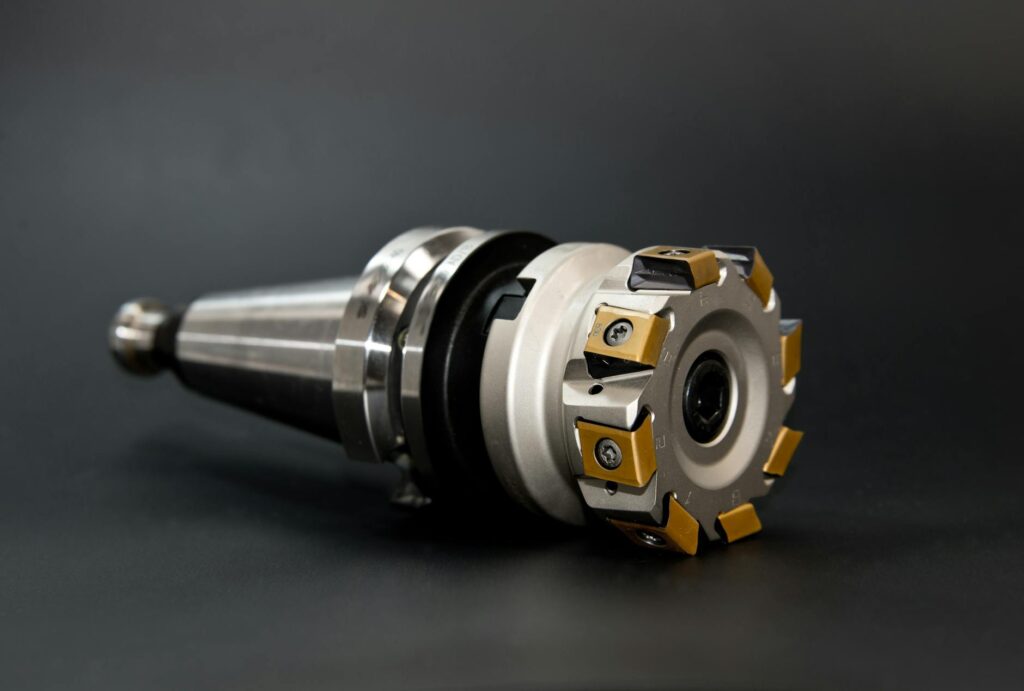
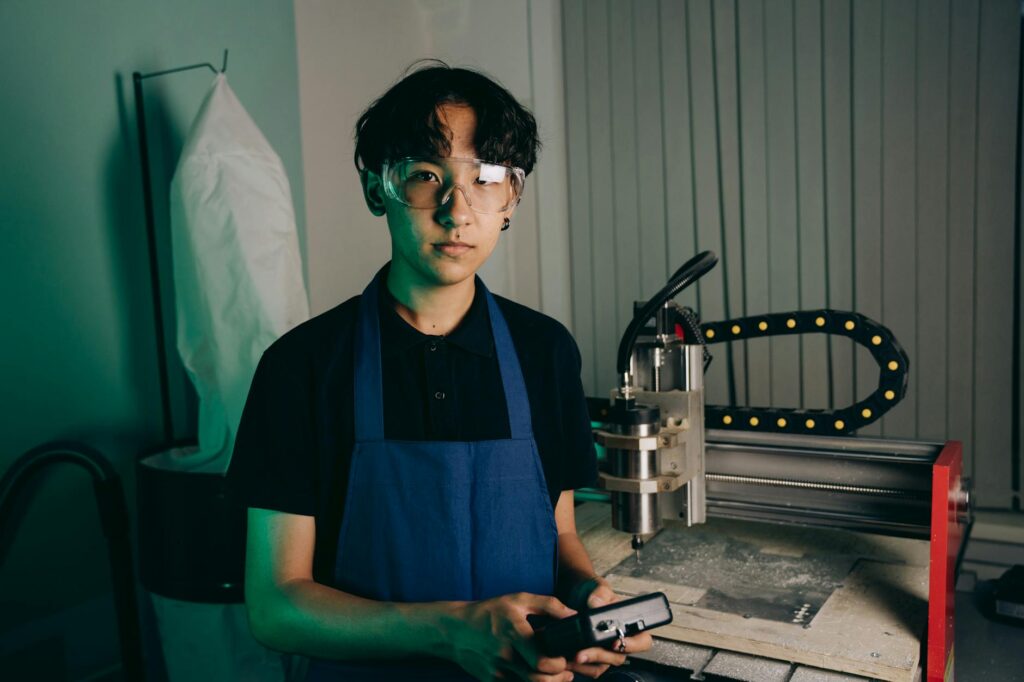
- Machining: Using tools like lathes, mills, and drills to cut away metal. CNC machining allows for incredible accuracy and repeatability.
- Shearing: Cutting sheet metal using blades, similar to scissors.
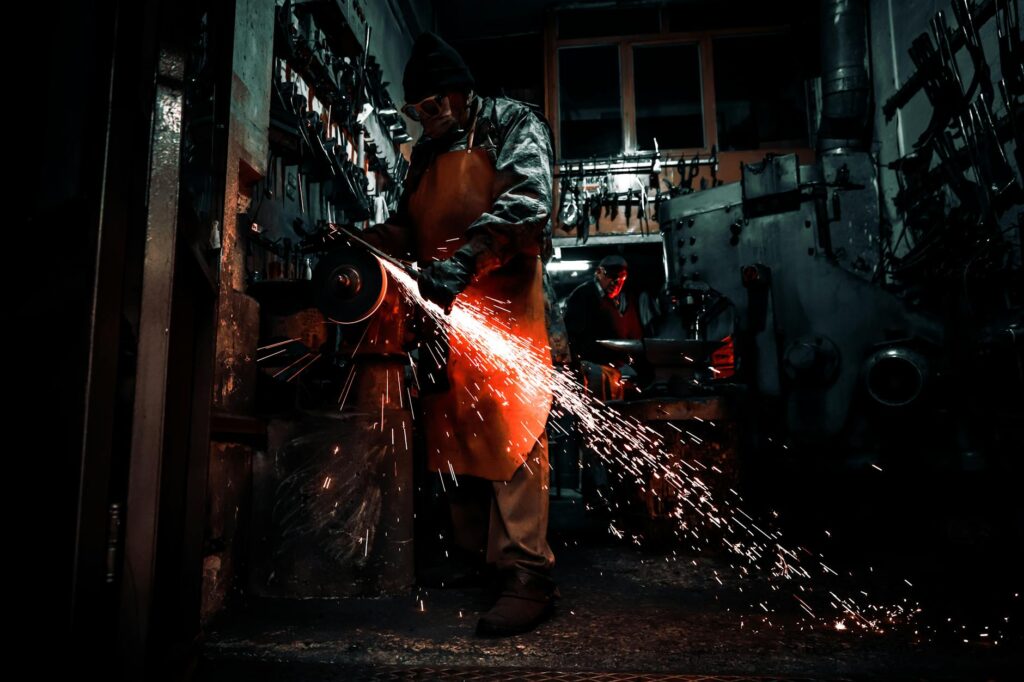
- Abrasive Cutting: Using grinding wheels or abrasive waterjets to cut through metal.
- Laser Cutting: Using a high-powered laser beam to melt and vaporize metal.
Joining
Here’s about permanently or semi-permanently connecting two or more pieces of metal.
- Welding: Fusing metal pieces together, typically with heat and filler material (e.g., TIG, MIG, Stick welding).
- Brazing and Soldering: Joining metals using a filler metal that melts at a lower temperature than the base metals.
- Riveting: Fastening pieces with mechanical fasteners (rivets).
Finishing
Here are the final steps to improve appearance, durability, or function.
- Grinding and Polishing: Smoothing surfaces and achieving desired finishes.
- Coating: Applying paints, powders, plating (like chrome or zinc), or anodizing to protect against corrosion and enhance aesthetics.
- Heat Treating: Altering metal’s properties (hardness, strength) through controlled heating and cooling.
🎬 Related Video
📹 that’s such a metal fabricator answer #metalfabrication #metalworking #metalmanufacturing — Watch on YouTube
The Human Element: Skill and Experience
While automation is rampant, the human touch in metalworking remains indispensable. I remember spending six months in a custom fabrication shop back in 2019, working on intricate architectural steel. We had state-of-the-art CNC plasma cutters, but the final fit and finish, the subtle adjustments made by feel and sight, were entirely up to us. A computer can cut a perfect line, but it can’t anticipate the slight warp in a beam or the best way to blend a weld seam by hand.
This hands-on experience is where true mastery lies. It’s about developing an innate sense for the material. You learn to hear the difference between a good hammer ring and a dull thud, to feel the heat radiating from a piece without touching it, to see the subtle color changes that indicate the metal is about to fail if pushed too hard. According to a 2024 study by the Association for Manufacturing Technology (AMT), the demand for skilled machinists and fabricators continues to outpace supply, underscoring the value of human expertise.
Expert Tip: Don’t underestimate the power of observation. Watch experienced metalworkers. Ask questions. Spend time just looking at how metal behaves under different conditions. This visual and tactile learning is as Key as any textbook knowledge.
Modern Metalworking: Innovations and Trends
The definition of metalworking has expanded in recent years. Additive manufacturing, or 3D printing with metals, is a major shift. It allows for complex geometries previously impossible to achieve with traditional subtractive or formative methods. Companies like EOS are leading the charge in industrial metal 3D printing, enabling rapid prototyping and the creation of custom parts for aerospace and medical industries.
Also, advancements in materials science mean we’re working with alloys that have unique properties – lighter, stronger, more corrosion-resistant than ever before. This pushes the boundaries of what’s possible in design and engineering. Even seemingly old processes are being reinvented. For instance, robotic welding systems can now perform complex, high-precision welds at speeds unattainable by humans, drastically increasing efficiency in mass production.
Contrarian Take: While everyone obsesses over 3D printing, the real revolution is often in the incremental improvements to established processes. A better welding flux, a more durable cutting tool, or a smarter CAM software for CNC machines can have a more immediate and widespread impact on the industry than a flashy new printing technology. Don’t dismiss the fundamentals.
| Process Type | Description | Typical Applications |
|---|---|---|
| Forming | Changing shape without removing material | Automotive panels, tools, architectural elements |
| Cutting | Removing material to achieve shape | Machined parts, precision components, intricate designs |
| Joining | Connecting multiple metal pieces | Structural frames, vehicle bodies, pipelines |
| Finishing | Improving surface and properties | Corrosion protection, aesthetic appeal, wear resistance |
Is Metalworking Dangerous?
Let’s be blunt: yes, metalworking can be dangerous if proper safety protocols aren’t followed religiously. You’re dealing with extreme heat, sharp objects, heavy machinery, hazardous fumes, and high-pressure systems. Burns, cuts, eye injuries, and respiratory problems are real risks.
However, it’s a manageable danger. The key is education and discipline. Always wear appropriate Personal Protective Equipment (PPE) – safety glasses with side shields or a full face shield, heat-resistant gloves, sturdy footwear, and when necessary, respirators. Understand your machinery, keep your workspace clean and organized, and never, ever rush. A moment of carelessness can lead to severe consequences.
The Occupational Safety and Health Administration (OSHA) provides extensive guidelines for safety in industrial environments, including metalworking shops. Adhering to these standards is non-negotiable.
Important Note: Many hobbyist metalworkers underestimate the risks. Just because you’re not in a huge factory doesn’t mean the dangers disappear. Treat every cut, weld, or grind with the same respect you’d give it in a professional setting.
Getting Started in Metalworking
If you’re drawn to the idea of shaping metal — where do you begin? Start small and focus on fundamental skills. Consider taking a beginner’s blacksmithing or welding class. These provide structured learning under expert supervision. For home use, basic hand tools like files, hacksaws, and clamps are essential. If you’re looking at power tools, a good quality angle grinder and perhaps a bench vise are solid starting points.
For those interested in precision, look into manual milling or lathe work before jumping straight into CNC. fundamentals of how cutting tools interact with metal is Key. And always, always prioritize safety. Invest in good PPE before you invest in fancy tools.
My Take: Don’t try to learn everything at once. Pick one area – say, basic welding or simple sheet metal bending – and get really good at it. The deeper you go into one discipline, the more you’ll naturally understand how it relates to others.
Frequently Asked Questions
what’s the most basic form of metalworking?
The most basic forms of metalworking involve manual shaping techniques like hammering, filing, and bending metal by hand or with simple tools. Blacksmithing, at its core, is about using heat and impact to form metal, a process that has been fundamental for millennia.
Is metalworking suitable for beginners?
Yes, metalworking can be suitable for beginners, but it requires a commitment to learning and safety. Starting with introductory classes in areas like blacksmithing or welding provides a safe and guided environment to learn foundational skills and best practices.
What kind of metal is easiest to work with?
Softer metals like aluminum, copper, and brass are generally easier to work with for beginners than harder steels. They require less force to shape, cut, and drill, making them more forgiving for learning fundamental techniques.
Do I need a huge workshop for metalworking?
No, you don’t necessarily need a huge workshop. Many metalworking tasks can be accomplished in a small garage or even a well-ventilated outdoor space, especially for hand-forming or basic welding. However, larger projects or advanced machining often require dedicated space and specialized equipment.
What’s the difference between metalworking and blacksmithing?
Metalworking is the overarching term for all processes that shape metal. Blacksmithing is a specific type of metalworking that focuses on shaping iron and steel using heat and hammering, typically done on an anvil.
The Enduring Power of Shaping Metal
So, what’s metalworking? It’s a vast, complex field that spans thousands of years and continues to evolve with technology. It’s the art and science of transforming one of humanity’s most essential materials. Whether you’re a hobbyist looking to craft something unique or an industrialist aiming for mass production, the principles of understanding metal and applying precise forces remain at its heart. It demands respect, skill, and a willingness to learn constantly. The tangible results, however, are worth every drop of sweat and every spark.
Source: Britannica
Editorial Note: This article was researched and written by the The Metal Specialist editorial team. We fact-check our content and update it regularly. For questions or corrections, contact us.
Source: Britannica